

The Most Liberating Thing About Sport Is That It Belongs to Everyone. Except When It Does Not.
On what soccer gives us, and who it has been leaving out.
The Fan Who Knows Every Name
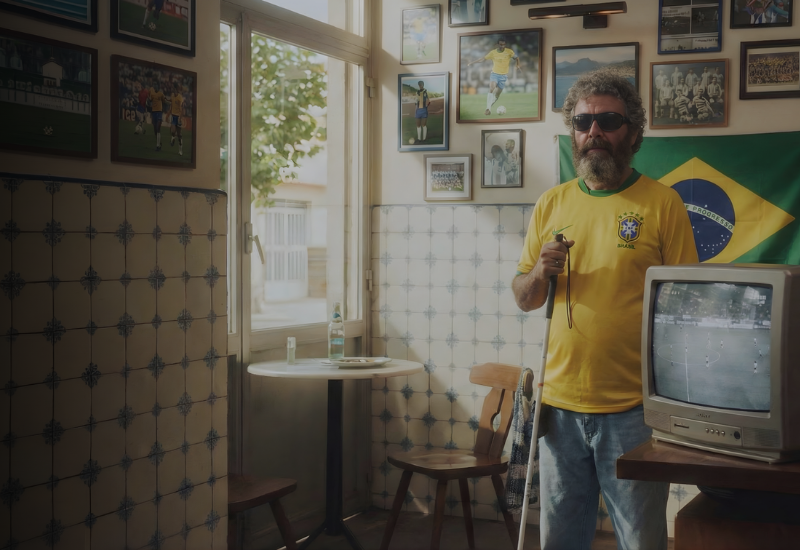
Picture a fan sitting at home on match day. She arrived at the screen early. She knows the starting lineup by heart. She has followed this team for fifteen years, through relegations and title runs, through managers she loved and seasons she would rather forget. She knows the players by the sound of their names in the announcer's voice. She knows the rhythm of the crowd when an attack is building. She cannot see the pitch. When the broadcast erupts, she hears it. When a player goes down, she feels the hush. When the referee makes a call, she catches the frustration in the commentary. But the actual game, the movement, the shape, the moment before the moment, is happening in a silence she was never asked about. She is not passive. She is not disengaged. She is one of the most dedicated fans watching that match. And she is experiencing a fundamentally different and lesser version of the same event as everyone else tuned in.This is not a story about disability. It is a story about a gap between what sport promises and what it actually delivers.
What Sport Promises
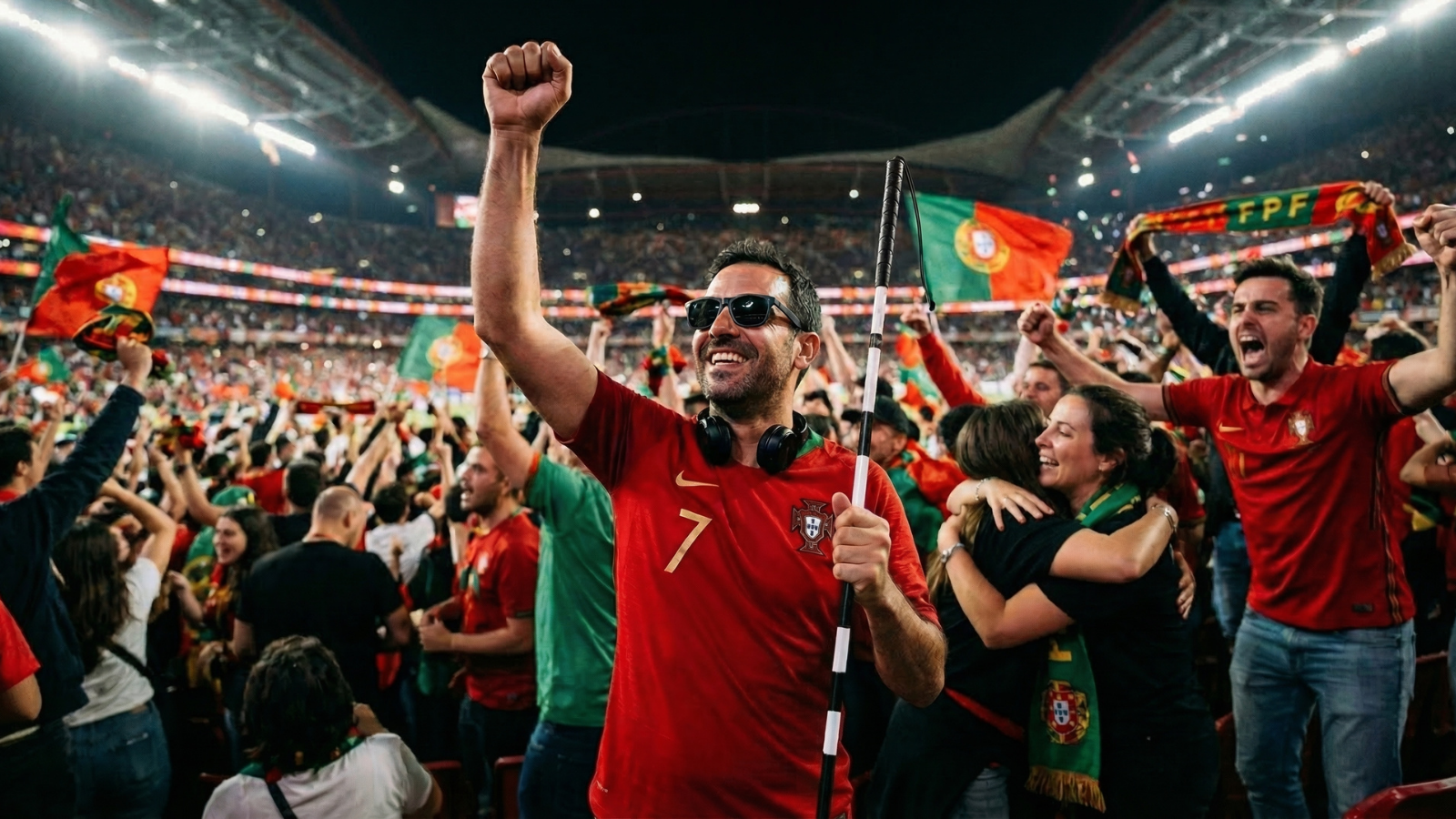
Sport makes a very specific promise to its fans.It promises that for ninety minutes, none of the things that usually separate people will matter. Not income, not profession, not status. The referee's whistle does not care who you are. The ball does not favor the wealthy end of the stadium. A goal is a goal, and the joy of it belongs equally to every person who witnesses it. This promise is why sport generates the kind of loyalty that almost nothing else in modern life can match. It is why people paint their faces and travel thousands of miles and pass team allegiances down through generations like heirlooms. Sport offers a rare and genuine experience of belonging to something larger than yourself, something that asks nothing of you except your attention and your passion. But the promise has always had an unspoken asterisk. It has been made, implicitly, to sighted fans. The architecture of the experience, the broadcast, the way the game is packaged and delivered and celebrated, has been built around the assumption that fans can see. And for the 295 million people worldwide living with significant vision impairment, that asterisk is not a footnote. It is a wall.
The Weight of Dependence
Ask a blind soccer fan what the hardest part of following the game is, and the answer is rarely what you might expect.It is not the absence of visuals. Blind fans are extraordinarily skilled at constructing a picture of the game from sound, from crowd noise, from commentary, from the texture of a broadcast. They are not passive recipients of information. They are active, experienced, sophisticated consumers of sport who have developed their own ways of seeing.The hardest part, almost universally, is dependence. Dependence on a friend to describe what just happened. Dependence on a family member to narrate the replay. Dependence on whoever happens to be nearby to fill in the gaps that the broadcast leaves open. The experience of being a blind sports fan is, for too many people, the experience of needing someone else in order to fully participate. That dependence is not inevitable. It is a design failure.When a blind fan has access to professional audio description, something shifts. They are no longer receiving the game secondhand through someone else's interpretation. They are receiving it directly, on their own terms, with the same level of detail and the same emotional texture that a sighted fan gets from watching. They are not being accommodated. They are being included. The difference between those two things is the difference between charity and equality.
Sport as Identity
Following a team is not a hobby. It is an identity.The colors you wear. The songs you know by heart. The players whose careers you have tracked from their debut to their prime. The defeats that still sting years later. The titles that still make you smile when you think about them on an ordinary Tuesday. This is the fabric of what it means to be a fan, and it is woven over years of accumulated experience.Blind fans build this identity too. But they build it with less material. They build it despite a system that was not designed for them, in the gaps left by broadcasts that assume everyone can see, in the moments that slipped past before anyone had the chance to describe them. When audio description is done well, it does not just convey information. It builds the same emotional texture that sighted fans take for granted. The way a player carries themselves when they are playing with confidence. The visual rhythm of a team that is clicking. The body language of a manager on the touchline when they know the game is slipping away. These are not decorative details. They are the substance of what it means to truly know a sport, a team, a player. Inclusive Moments is built on the belief that blind fans deserve access to that substance, not just the scoreline.
The Liberation Is in the Detail
There is a moment in every great audio description when the listener stops processing information and starts experiencing the game. It happens when the description is precise enough and vivid enough to stop being a translation and start being the thing itself. When you are not hearing about the free kick, you are with it. When you are not being told that the goalkeeper made a save, you are feeling the tension of the moment before it.That is what Inclusive Moments delivers. Professional audio descriptions of critical match moments and key players, available on demand after the final whistle. Not a summary. Not a highlight reel with a caption. A full, crafted, human description of what happened and what it looked like, built specifically for blind and low-vision fans who deserve to experience the game on their own terms.It is not a technical achievement. It is a human one. It requires trained professionals who understand both the craft of audio description and the culture of the game. It requires quality standards that treat blind fans as a primary audience, not a secondary concern.
What Belonging Feels Like
Sport, at its best, is one of the few places in modern life where strangers become a community. The fan who knows every name knows this. She has felt it, even through the gap, even in the incomplete version of the experience she has had access to until now. She knows what it is to be part of something larger than herself, to share a moment of collective joy or collective heartbreak with millions of people she has never met.She deserves to feel it fully. Inclusive Moments exists because belonging should not require perfect vision. Because the most liberating thing about sport is the promise it makes, and that promise should be kept for everyone who shows up to claim it.The game is for everyone. We are here to make sure it sounds like it.
Visit inclusivemoments.com
.png)